Material on this page draws on the ProducepakQI app guide, the Producepak app guide, the Pak-Bot guide and Producepak and Farmsoft quality control pages listed under Resources below.
Why quality disputes are so hard
Price disputes over quality are a daily part of the fresh produce trade. A buyer says a load arrived with too much decay; the grower says it left the farm in perfect condition. An importer says a container arrived soft; the exporter blames the shipping line. A retailer claims a delivery was out of specification; the supplier says the distribution centre's inspector was too strict. Each side has an opinion and, too often, very little evidence.
Without evidence, disputes are settled by bargaining power and relationships rather than facts. The weaker party gives way, resentment builds, and the same argument happens again next week. With objective, timely evidence, the conversation changes from "who is right" to "what does the record show, and what is fair".
Producepak lists "make price negotiations easier" as one of the core purposes of its quality inspection app. This page explains how.
What counts as good quality evidence
Photos
Unlimited photos attached to each test and shown on inspection reports. A clear photo of the defect, with the label or lot visible, settles many disputes on its own.
Measurements
Percent of sample by weight, Brix readings, firmness, temperatures. Numbers are harder to argue with than descriptions.
Standards
Results scored against the agreed specification, with the reference images inspectors used.
Timing
The inspection recorded at the moment of receival, not reconstructed later.
History
The supplier's record over weeks and seasons, showing whether a problem is a one-off or a pattern.
From inspection to agreed outcome

1. Record the inspection properly
The inspector records the receival inspection in Producepak QI, using the correct program for the product and supplier. Defects are measured using the appropriate scoring method, and photos are attached to the tests that failed.
2. Send the evidence immediately
The ProducepakQI guide describes automatic alerts that can go to suppliers as well as team members, with photos and attachments included. Farmsoft's material describes instantly sending quality inspection results to suppliers. The supplier sees the problem while the product is still on the dock, not days later in an invoice deduction.
3. Agree the outcome
With the facts in front of both parties, the conversation is about the remedy: a price adjustment, a regrade to a lower program, a partial return or acceptance with a note. Because both sides are looking at the same photos and numbers, agreement is usually faster.
4. Build the history
Every inspection adds to the supplier's quality record. Over a season, that record becomes the most valuable negotiating tool of all.
Speed matters in perishable disputes
Fresh produce does not wait for a dispute to be resolved. If a buyer and supplier argue for three days about a load of berries, the berries are worth little by the time they agree. Instant alerts with photos compress the timeline: the supplier can respond within the hour, accept a regrade, or arrange for the product to be redirected while it still has value. Faster agreement protects both parties' money.
Using supplier history at the negotiating table
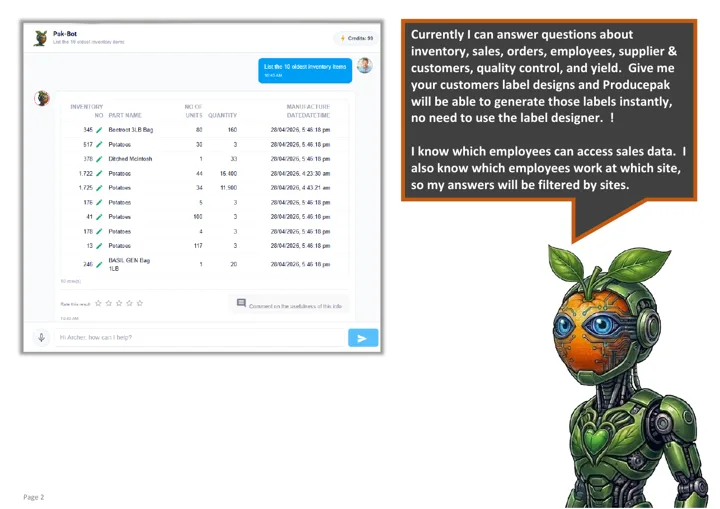
Price negotiations are not only about individual loads. Season contracts, program pricing and supplier selection all depend on quality over time. Producepak QI tracks supplier performance and quality trends, and Pak-Bot can answer questions about quality control and yield.
Questions to bring to a supplier review
- What share of this supplier's deliveries were rejected or downgraded this season?
- Which defects caused most of the problems?
- Did results change over the season, for example later in harvest?
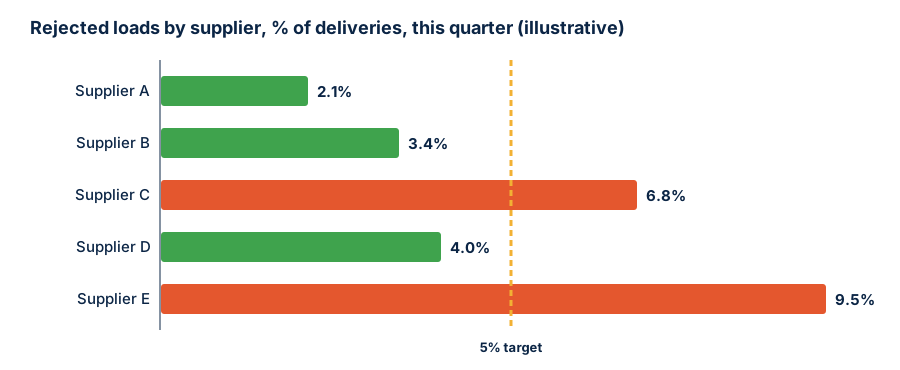
- How does this supplier compare with others supplying the same product?
- What did quality problems cost in packout, claims and waste?
Asked as plain-language questions to Pak-Bot, such as "rejected loads by supplier this season" or "most common defects for this supplier this month", these answers can be ready before the meeting. The exact wording depends on how inspections are recorded in your system.
Negotiating with customers, too
Quality evidence protects suppliers as well as buyers. When a retailer or wholesaler claims a delivery was out of specification, a packer with post-pack and pre-shipment inspections, photos and temperatures recorded at dispatch can show the condition of the product when it left. If the problem developed in transit or at the customer's site, the evidence supports a fair outcome. Producepak's quality control page lists retailer specifications including Walmart, Whole Foods, Tesco, Woolworths, Coles, Aldi and IGA, so inspections can be scored against the standard the customer will apply.
Tip: make pre-shipment photos routine for your largest customers. A photo of each pallet's product and label at loading is one of the cheapest insurance policies a produce supplier can have.
Fair dealing with growers
For packers and marketers working on behalf of growers, quality evidence also supports grower relationships. Growers paid on packed-out or graded product want to understand why their fruit graded as it did. Sharing inspection results and photos, as soon as they are recorded, makes grading decisions transparent. Producepak's grower payment features can then settle on a basis both sides have seen.
Making evidence stand up
Evidence is only persuasive if it is reliable. A few disciplines help:
- Agree specifications in advance. Use the customer's or contract specification as the basis of the inspection program.
- Sample consistently. Follow the same sample sizes and methods every time; the app allows one or more samples per inspection.
- Photograph clearly. Good light, the defect in focus, and the lot or label visible.
- Record at the right time. Inspect on arrival, not hours later.
- Calibrate inspectors. Use reference images so different inspectors score alike.
Three negotiation scenarios
A receival downgrade
An illustrative load of table grapes arrives with berry splitting above the specification limit. The inspector records the percentage of the sample affected, photographs representative bunches and submits the inspection. The supplier receives an alert with the photos within minutes. Seeing the evidence, the supplier agrees to a price adjustment for a downgrade rather than arranging collection. The whole exchange takes an hour instead of days.
A season contract review
At the end of the season, a buyer reviews five suppliers of the same product. The supplier rejection chart shows two suppliers well above the target rejection rate, with most problems late in the season. The buyer offers the better-performing suppliers more volume next season and asks the other two for a harvest-timing plan before committing.
A customer claim
A retailer claims a delivery of leafy greens arrived above temperature. The supplier's pre-shipment inspection shows product temperature within range at loading, with photos of the pallets. The evidence points to transport, and the claim is redirected accordingly.
These scenarios are illustrative, but the pattern is the same in each: clear evidence, shared quickly, shortens the argument and leads to a fairer outcome.
What not to do
- Do not withhold results. Sending evidence late, or only when it suits you, damages trust and weakens your position next time.
- Do not change the standard mid-season. Agree specifications at the start and inspect against them consistently.
- Do not rely on one photo. Photograph representative samples, not only the worst unit.
- Do not ignore good results. Sharing good results with suppliers builds goodwill that helps when results are poor.
Turning negotiations into partnerships
The long-term value of quality evidence is not winning more arguments; it is having fewer of them. When suppliers receive prompt, fair, evidence-based feedback on every load, they can fix problems at source: harvest timing, handling, cooling, packaging or transport. Over a few seasons, the relationship shifts from disputes to joint improvement. That is when price negotiations become genuinely easier, because both sides trust the data.
Preparing for a supplier review meeting
- Gather the season's results. Rejection and downgrade rates, defect types and quality scores by week for the supplier.
- Compare with peers. The same measures for other suppliers of the same product.
- Pick representative photos. Two or three clear examples of the most common problems, and examples of good deliveries too.
- Estimate the cost. The value of downgrades, claims and waste linked to the supplier's product.
- Prepare proposals. Volume, price or specification changes linked to agreed quality targets.
Arriving with this pack changes the tone of the meeting. The discussion moves quickly past whether problems happened to what will change next season, and on what terms.
Evidence and contracts
Quality evidence is most powerful when contracts and programs are written to use it. Agree in advance which specification applies, how samples are taken, which scoring methods are used, how quickly results must be shared and what adjustments apply at each level of failure. When the contract says "decay above the agreed percentage of sample, measured at receival and supported by photos, results in an agreed price adjustment", a Producepak QI inspection is the mechanism that applies it. Both parties know the rules before the first load arrives.
Evidence for importers and exporters
International trade adds distance and time to every dispute. An importer who finds soft fruit on arrival needs to show the exporter, and sometimes the shipping line or insurer, what the product looked like when the container was opened. Arrival inspections with photos, temperatures and defect percentages, recorded at the moment of opening and shared immediately, give the importer a strong basis for a claim. Exporters benefit from pre-shipment inspections in the same way: a record of product condition at loading protects them from claims for problems that developed in transit.
Keeping negotiations confidential
Supplier quality comparisons are commercially sensitive. Share each supplier's own results with that supplier, and keep comparisons between suppliers for internal use. Producepak's user roles, and Pak-Bot's awareness of which employees can see which data, help keep supplier rankings with the buyers and managers who need them.
Price negotiation questions
How does quality inspection make price negotiations easier?
It provides objective evidence, including photos, measured defects and scores, shared instantly with suppliers, plus a history of supplier performance over time.
Can suppliers receive inspection results automatically?
Yes. Inspection programs can send instant alerts with photos and attachments to suppliers as well as team members.
Can I compare suppliers?
Yes. Producepak QI tracks supplier performance and quality trends, and Pak-Bot can answer questions about quality control and yield.
Does evidence help with customer claims?
Yes. Post-pack and pre-shipment inspections with photos show the condition of product when it left your site.