Capsicum packing Australia
Capsicum packing Australia by Farmsoft delivers rapid capsicum sorting, grading, capsicum quality inspections, capsicum packing, capsicum storage and shipping for Aussie capsicum packers and wholesalers.
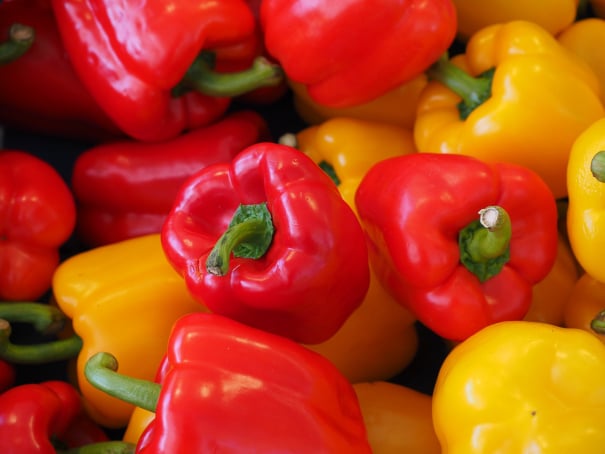
Capsicum packing Australia
View Fresh Produce App Specifications and Requirements.
One of the heroes of the Mediterranean diet, capsicum is highly versatile vegetable. It can be stuffed, roasted, stir-fried or simply eaten raw as a snack. Capsicum is purchased by 77 per cent of Australian households and enjoys year-round sales, peaking during the height of summer.
Australians eat more capsicum than their American counterparts. Just 44 per cent of US households purchase capsicum in a quarterly period compared to 59 per cent of Australian households.
Over the past year, capsicum volume sales in Australia have grown steadily (2.7 per cent), while many competitor vegetables have seen decline. The average price of capsicum has remained relatively stable with an increase of just 0.9 per cent over the past 12 months. However, this was not the case across the major supermarket chains, with these retailers increasing the price per kg of capsicums by 5.8 per cent, and experiencing a 2.2 per cent volume decline and 3.5 per cent dollar growth for this channel. Major supermarkets sell over two-thirds of the dollar sales of capsicum and are highly influential on the overall trends we see in the market.
Contrary to the trend in major supermarkets, greengrocers, along with markets and other independent supermarkets, enjoyed strong volume (11.4 per cent) and dollar growth (3.8 per cent) for capsicums, indicating a decrease in average price (6.8 per cent).
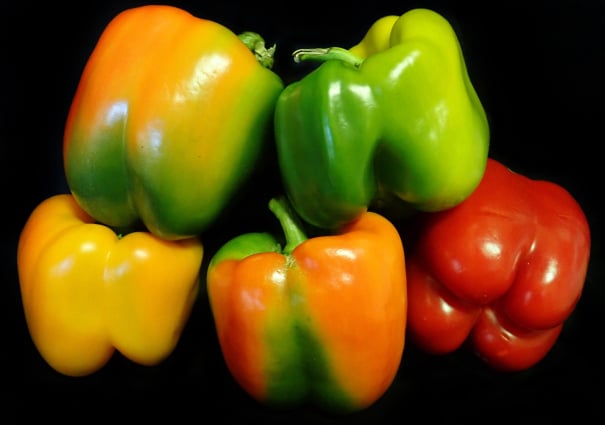
Capsicum packing Australia Best Practices
Fresh produce quality inspection specifications & requirements.
Capsicums (and chillies) are unique vegetables with special
qualities that set them apart. Botanically a fruit, they may be
harvested green and immature or when fully coloured. While
full red fruit are usually the highest price, leaving the crop to
mature can increase losses and so reduce yield.
Market preferences are for capsicums that are either fully
green or fully red (or yellow, orange, purple, depending on
variety). Capsicums are ‘non-climacteric’, meaning they cannot
be ripened after harvest. Treating capsicums with ethylene will
have little effect on colour change, but does increase softening
and disease development. Partially coloured fruit will continue
to change if held at 12°C−20°C, but may not reach the same
colour intensity as fruit picked at a later stage.
Capsicums should not be harvested while wet, and preferably
not very early in the morning. Under these conditions fruit is
fully turgid so more easily scuffed or damaged. Capsicums
harvested during hot weather should be immediately placed in
the shade to avoid dehydration and sunburn. The best harvest
conditions are when weather is cool to warm and dry.
Their waxy skin and lack of natural openings means that
capsicums are fairly resistant to water loss. The fruit are
usually packed immediately after harvest, then cooled to
around 7°C within 24 hours using forced air or room cooling
systems. Longer delays will increase softening and rots. The
stem and calyx are particularly susceptible to rots under moist
conditions, as occur inside cartons while fruit remains warm.
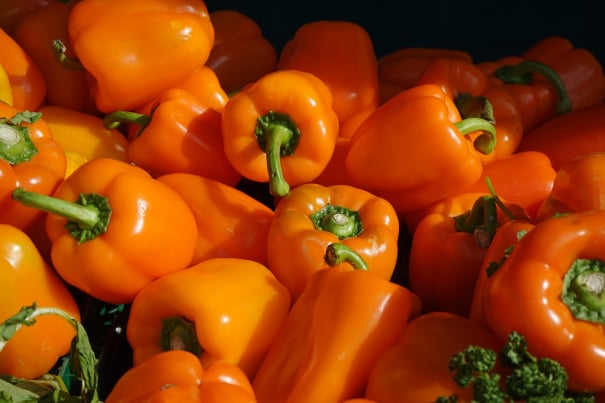
Capsicum packing and storage Australia
Capsicums must never be immersed in water. However, they
can benefit greatly from washing with a sanitiser under a
pressure spray or (preferably) using soft brushes. This not only
improves appearance but also removes fungal spores that
would otherwise cause disease. Heating the water can further
increase the effectiveness of cleaning. Hot water shower /
brushing treatments reduce chilling sensitivity as well as
postharvest disease development, and are used commercially
for capsicums exported from Israel to Europe.
Washing is less important for capsicums grown under
protected cropping systems. Fruit grown hydroponically in a
glasshouse does not need washing to clean it. However, if long
storage periods are planned, fruit may still benefit from a hot
water treatment.
Storage life
Capsicum storage life is highly dependent on maturity, variety
and growing conditions. Storage life is also extremely variable,
as it is usually ended by rots. These can affect one or two fruit
within a carton while leaving the others untouched.