Tomato packing Australia
End to end business management solution for Australian tomato packshed, tomato packers, and tomato wholesalers. Aussie tomato packers have increased traceability, and less tomato inventory waste with Farmsoft's Tomato Packing App. Comply with Coles, Woolworths, IGA, Aldi requirements.
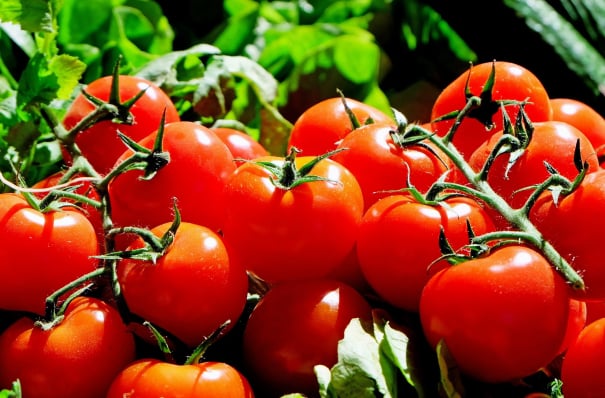
Tomato packing Australia Compliance
View Fresh Produce App Specifications and Requirements Coles Woolworths Aldi IGA.
Flavor, color, shape and texture are all important characteristics of fresh tomatoes. Fruit also needs to be clean and clear of blemishes such as decay or disease. They should be of uniform shape, symmetry and size. Tomatoes need to be bright and uniform in color, without green shoulders or immature green spots or blotches.
tomato tomato
Depending upon the relative levels of carotenoid pigments in the fruit, color can range from yellow to orange, pink, red or even white. The specific carotenoid, lycopene provides the fruit with its red color. Higher levels of beta-carotene provide an orange color.
The texture depends upon how tough the skin is, the firmness of the flesh, and the proportion of the locular (gel-like structures) and pericarp tissues. Firmer tomatoes are less prone to damage and have a longer shelf life. Higher levels of calcium in the cell wall will improve fruit firmness and as a result, transportation and storage characteristics. Fresh tomatoes are graded according to their quality characteristics, as table below shows:
Timing of harvest depends upon end market requirements and local practices. Picking can start at the mature-green stage, but practices that harvest before this can result in fruit, once ripened, that has poor color and flavor. Thus, the ‘breaker’ or ‘turning’ stage of fruit development – when color is turning from green to tannish-yellow - is when most fresh fruit is picked, particularly if it is to be shipped considerable distances, e.g. glasshouse production in countries such as the USA, Turkey and Morocco.
Cluster tomatoes are picked when the least mature fruit on the truss begins to show red color. This helps ensure uniformity when the crop reaches the consumer.
Increasing storage temperature and using ethylene can bring ripening forward.
Flavor is generally related to the relative concentrations of sugars and acids in the fruit, mainly fructose and citric acid. The best, most flavorsome combination is a high sugar and high acid content. A normal pH range in tomatoes is 4.0- 4.5 and the lower the pH, the more tart or sour the fruit.
Flavour is normally measured by taste panels who rate the tomato for a range of characteristics including smell, aroma, firmness, juice, mealiness, skin texture, acids and sugars.
In general, smaller, cherry tomatoes have a higher Brix ratio and are sweeter than larger round or common tomatoes.
Processed Tomatoes
There are a wide range of processed tomato products on the market, from canned tomatoes, juice, soup, sauce, paste, ketchup, pulp to puree.
processed tomato
Color is particularly important for processed tomatoes and fruit need to be of a uniform, strong red, and free of defects such as cracks and bruises. This is measured using a range of methods including spectrophotometry and colorimetry. Processors lay down a strict range of values. Processed crops must ripen evenly and at least 75% of the fruit has to be mature at harvest.
Various countries have different acceptable size ranges for different processed products. In Spain, for example, fruits used for juice usually weigh between 60–100g. For canning as whole tomatoes, fruits are within the 30–60g weight range. When used for canning, fruit must have a thick, firm wall so that they retain their shape when cooked. The peduncle must also be easy to remove from the fruit.
Firmness decreases during fruit maturation. The use of calcium will help minimize breakdown of pectins by holding the pectic matrix together, maintaining the cell wall strength. Firmness is assessed by pressure load or shear press tests. Tomatoes with a Durofel rating of >75 are described as firm, 60-70 are soft, and <60 limp.
Peelability is important for whole or diced processing tomatoes.
Fruit crops with a high TSS content reduce the need for, and costs of, removal of water and disposal of wastewater during processing.
Tomatoes for processing require a minimum
°Brix of 4.5. This compares with an acceptable range of 3.5 - 5.5 in fresh tomatoes. The TSS of processed products is measured by refractometry and should follow the ranges on the table next.
The °Brix content of the finished tomato product is largely controlled by the processor and manufacturing process. However, some processors do pay a higher price for higher dry matter tomatoes.Viscosity – which is important in paste products - is related to the level of insoluble solids. It is normally measured using a viscometer or consistometer – with results expressed as Bostwick unit (cm) or centipoises. Acceptable ranges depend on methods and products. In Spain, processors desire a Bostwick reading of 4 - 8 in tomatoes with 12°Brix. Acids – mainly citric and malic acid, determine the flavor of the processed product.
Acids – mainly citric and malic acid, determine the flavor of the processed product. Measurement of acidity is by simple pH assessment with a range of pH 4-5 being typical for tomato. Total acidity, can be measured by chromatography or enzymatic reaction – where 0.35 – 0.40g/100cc juice is required. Alternatively, processors measure total titratable acidity or volatile acidity after distillation.
Tomato packing and storage Australian Food Safety
Fresh produce quality inspection specifications & requirements.
There are four main varieties of tomatoes, viz., Round (spherical), Beef, Cherry and Plum tomatoes.
Depending on the market and production area, tomatoes are harvested at stages of maturity ranging from physiological maturity (mature-green stage) through full-ripe.
Ripeness stages are defined according to the following standards for red-fleshed tomatoes:
Ripeness Stage External Color
(1) Green Fruit surface is completely green; the shade of green may vary from light to dark.
(2) Breaker there is a definite break in color from green to tannish-yellow, pink or red on not more than 10% of the surface
(3) Turning 10% to 30% of the surface is not green; in the aggregate, shows a definite change from green to tannish-yellow, pink, red, or a combination thereof
(4) Pink 30% to 60% of the surface is not green; in the aggregate, shows pink or red color
(5) Light red 60% to 90% of the surface is not green; in the aggregate, shows pinkish-red or red
(6) Red More than 90% of the surface is not green; in the aggregate, shows red color
High quality fruit have a firm, turgid appearance, uniform and shiny colour, without signs of mechanical injuries, shrivelling or decay. Principle causes for postharvest losses are decay, external damage incurred during harvest and handling, and harvest at an improper maturity stage.
Cooling and Storage
Following commercial packing, tomatoes are routinely palletised and cooled to 20°C for ripening or to 12°C for storage. Optimal storage temperatures depend on the maturity stage of the tomatoes. Ideal conditions for ripening are 19°C to 21°C with 90% to 95%RH.
Storage >27°C reduces intensity of red colour, while storage <13°C retards ripening and can lead to development of chilling injury, particularly in tomatoes at the mature-green stage. Red tomatoes can be stored at 7°C for a couple of days; tomatoes stored at 10°C were rated lower in flavour and aroma than those held at 13°C.
Tomatoes are climacteric and show a pronounced increase in respiration during ripening. The intensity and duration of the climacteric varies among fruit species. Respiration also varies with temperatures and atmospheric composition.
Tomatoes are chilling sensitive at temperatures below 10°C (50°F) if held for longer than 2 weeks or at 5°C (41°F) for longer than 6-8 days. Consequences of chilling injury are failure to ripen and develop full colour and flavour, irregular (blotchy) colour development, premature softening, surface pitting, browning of seeds, and increased decay. Chilling injury is cumulative and may be initiated in the field prior to harvest.
Controlled atmosphere considerations
Tomatoes can be stored under CA to extent product quality. The exact combination of CO2 and O2 varies among maturity stages and cultivars; but a satisfactory CA is 3% O2 and 2% CO2. Storage in 3% O2 and 97% N2 extended postharvest life of mature-green tomatoes for 6 weeks at 13°C without development of off-flavours.
Storage disorders
Alternaria rot, Anthracnose, Bacterial soft rot, Bacterial speck, Blight, Canker, Chilling injury, Grey mould rot, Internal browning, Leaf spot, Splitting, Water rot, Watery soft rot.
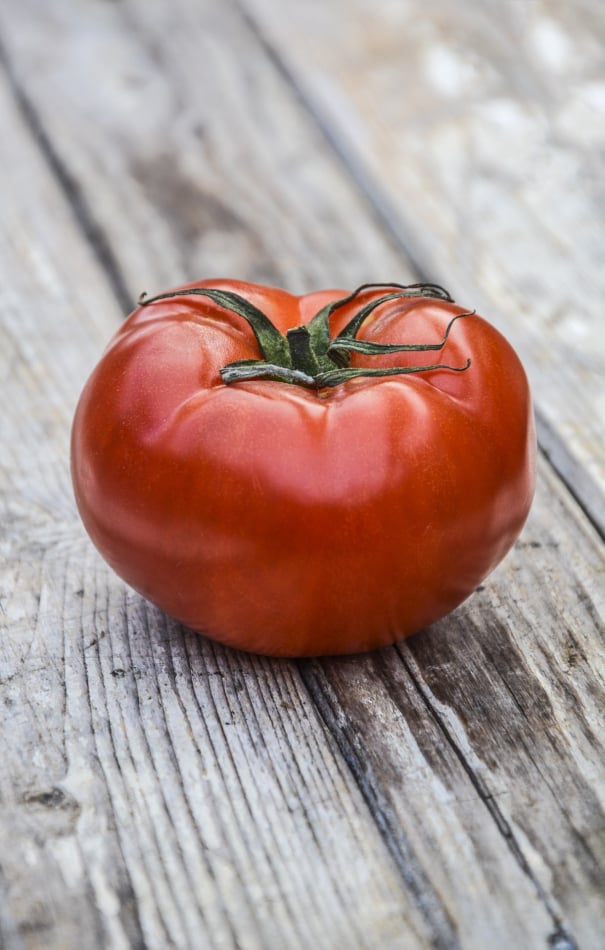
Tomato packing Australia Packaging Standards
Tomatoes are juicy berry fruits of the nightshade family (Solanaceae). They came originally from Central and South America and were brought back to Europe by Christopher Columbus on his second voyage in 1498.
The fruits of the numerous cultivated types of tomato are a fiery scarlet, orange-red or yellow color and are generally large and often of a highly flattened, and sometimes peripherally lobed, appearance. However, they are frequently also spherical, oval or even pear-shaped.
Tomatoes are subdivided into four main varieties depending on color, shape, weight, size and cultivation method:
Round (spherical) tomatoes: these are the most widely used, round, smooth, generally red tomatoes intended for fresh consumption.
Beef tomatoes: these are larger than round tomatoes and are often also called ribbed tomatoes because of their shape. They are mostly used in the processing industry, but are sometimes also eaten fresh.
Cherry tomatoes: the name points to the similarity in shape and size to cherries. Cherry tomatoes are of a higher quality than round tomatoes and beef tomatoes.
Plum tomatoes: a thick-fleshed variety, low in seeds, again used both for fresh consumption and processing.
Tomatoes, which are picked when green, post-ripen subsequently so obtaining their red color (lycopene and carotene content). Their typical aroma is unable to develop fully, however. The best time for harvesting tomatoes differs depending on their intended use (e.g. duration of transport). Outdoor tomatoes have higher nutrient contents than greenhouse tomatoes.
Quality / Duration of storage
Quality and suitability for transport are assessed on the basis of the following criteria. Tomatoes must be sound, clean, fresh, undamaged, free of foreign odors and flavors and free of abnormal moisture. Round, smooth varieties must be of uniform size and ripeness. They must be of a firm consistency and free from hard tops and unripe areas and have no empty seed chambers.
Organoleptic testing: tomatoes exhibit a satisfactorily firm consistency if they are not deformed at all by cutting with a sharp knife at right angles to the placenta and the content of the seed chambers does not ooze out. Hard tops are present if finger pressure on the stem-end indicates hardening of the flesh of the fruit (pulp) over clearly defined areas generally green in color.
Various sources state maximum duration of storage as follows:
Where controlled atmosphere transport is used, the transport and storage duration of tomatoes may be extended. The following parameters apply in such a case [16]:
Designation Temperature Rel. humidity O2 CO2 Suitability for controlled atmosphere
green, unripe tomatoes .
Intended use
Tomatoes are mainly eaten raw (for fresh consumption, in salads and starters).
Tomatoes are also processed industrially to produce tomato puree, tomato paste, peeled tomatoes, canned tomatoes, tomato chutney, tomato ketchup and tomato juice.
Figures
(Click on the individual Figures to enlarge them.)
Drawing, tomatoes
Countries of origin
This Table shows only a selection of the most important countries of origin and should not be thought of as exhaustive.
Europe Germany, Netherlands, Spain, Canary Islands, Belgium, Italy, France, Turkey, Greece, Cyprus, Romania, Bulgaria, Hungary, Albania, Russia
Africa Morocco, Egypt, Kenya, South Africa, Senegal, Algeria
Asia China
America USA, Brazil, Colombia, Venezuela, Chile
Australia
Packaging
Tomatoes are packaged in open and closed fruit crates (tomato crates), tubs, cartons, trays and jointed boxes. Sometimes they are carefully arranged, sometimes randomly bulk-packed. Broken, damaged and damp packages must be rejected.
Container transport
Refrigerated container with fresh air supply or controlled atmosphere.
Cargo handling
Because of its impact- and pressure-sensitivity, the fruit has to be handled with appropriate care.
The required refrigeration temperature must always be maintained, even during cargo handling.
In damp weather (rain, snow), the cargo must be protected from moisture, as there is otherwise a risk of premature spoilage.
Because of its considerable impact- and pressure-sensitivity, packages of this cargo must be secured in such a way that they are prevented from damaging each other. Spaces between packages or pallets must be filled, to prevent slippage or tipping. By selecting the correct packaging size or cargo unit (area module or area module multiple), holds can be tightly loaded (without spaces).
Risk factors and loss prevention
RF Temperature
Tomatoes require particular temperature, humidity/moisture and ventilation conditions (SC VII) (storage climate conditions).
A written cooling order must be obtained from the consignor before loading is begun. This order must always be complied with during the entire transport chain.
The following Table merely constitutes an estimate of appropriate temperature ranges. Temperatures may deviate from these values, depending on the particular transport conditions.
The cargo and holds/containers should be precooled prior to loading.
Chilling damage may occur at pulp temperatures < 10°C, green tomatoes being more at risk than ripe ones. According to [12], tomatoes must never be stored below 0°C. Even refrigerated storage leads to loss of aroma.
Overcooled fruits become soft, their skin takes on a brown color (inhibited carotene synthesis) and they lose flavor.
Temperatures > 25°C inhibit lycopene synthesis (red pigment).
Tomatoes require particular temperature, humidity/moisture and ventilation conditions (SC VII) (storage climate conditions).
Designation Humidity/water content Source
Relative humidity 85% [1]
80 – 85% [5]
85 – 90% (for post-ripening of green tomatoes) [5]
80 – 85% 14]
Water content 94 – 97% [1]
Maximum equilibrium moisture content 90% [1]
At rel. humidities < 80%, tomatoes lose weight and their quality is degraded by evaporation.
At rel. humidities > 90% there is considerable risk of mold growth and rot.
During cooling of the product, a rel. humidity of < 80% should be maintained, to check any possibility of mold attack initially by the low rel. humidity and subsequently by a low travel temperature. After the reduction period, the rel. humidity should be increased to the values indicated above, to prevent drying-out of the product and thus greater weight and quality loss.
RF Ventilation
Tomatoes require particular temperature, humidity/moisture and ventilation conditions (SC VII) (storage climate conditions).
Recommended ventilation conditions: circulating air, 40 – 60 circulations/hour with continuous supply of fresh air.
The circulating fans must be set to full power. The supply of fresh air depends on the CO2 content of the hold/container air, which should amount to 1 vol.% at most.
During the voyage, tomatoes must be stored under well-ventilated conditions, so that evaporation does not cause humidity to increase to above the recommended values and ripening gases, such as carbon dioxide and ethylene, can be dissipated.
To ensure good airing, the packaging units should be stacked upright and on top of one another. In the case of horizontal airflow in the hold or container, the cargo should be stowed leaving horizontal channels.
RF Biotic activity
Tomatoes display 2nd order biotic activity.
They are living organs in which respiration processes predominate, because their supply of new nutrients has been cut off by separation from the parent plant.
Care of the cargo during the voyage must be aimed at controlling respiration processes (release of CO2, water vapor, ethylene and heat) in such a way that the cargo is at the desired stage of ripeness on reaching its destination. Inadequate ventilation may result in fermentation and rotting of the cargo as a result of increased CO2 levels and inadequate supply of atmospheric oxygen (see Ventilation).
CO2 evolution In tomatoes, metabolic processes continue even after harvesting. The fruit absorb oxygen and excrete carbon dioxide and ethylene.
Upper limit of permissible CO2 content 0.2 vol.%
Ethylene evolution
Active behavior Tomatoes produce moderate quantities of ethylene, their ethylene production rate being 1.0 – 10.0 µl/kg*h [16]. They cause cucumbers to turn yellow and cauliflower to lose its firm consistency.
Passive behavior The sensitivity of tomatoes to ethylene may be classified as high [16]. They must not therefore be stored together with ethylene-producing goods (allelopathy).
If ventilation has been inadequate (frost) or has failed owing to a defect, life-threatening CO2 concentrations or O2 shortages may arise. Therefore, before anybody enters the hold, it must be ventilated and a gas measurement carried out. The TLV for CO2 concentration is 0.49 vol.%. To prevent the quality of the tomatoes from being degraded, the CO2 content of the hold air should not exceed 0.2 vol.%.
Active behavior Tomatoes have a very slight, pleasant odor.
Passive behavior Tomatoes are highly odor-sensitive in relation to other goods. Boxes must be made of resin-free wood, as odor tainting may otherwise occur.
Active behavior Tomatoes do not cause contamination.
Passive behavior Tomatoes are sensitive to contamination by dirt, fats and oils. The holds or containers must accordingly be clean and in a thoroughly hygienic condition before loading.
RF Mechanical influences
Tomatoes are highly pressure- and impact-sensitive and are therefore generally packaged with particularly high levels of impact protection (e.g. wood wool liners).
RF Toxicity / Hazards to health
If ventilation has been inadequate (frost) or has failed owing to a defect, life-threatening CO2 concentrations or O2 shortages may arise. Therefore, before anybody enters the hold, it must be ventilated and a gas measurement carried out. The TLV for CO2 concentration is 0.49 vol.%.
RF Insect infestation / Diseases
Chilling damaged green fruit stored for a relatively long period is at particular risk of rot. Considerable losses are caused by Alternaria fruit rot (Alternaria porri) among other things. Symptoms: sunken, blackish areas of rot at the stem-end, covering of dull black fungus mat, especially on green fruit.
Losses also arise as a result of gray mold rot, which is caused by the mold Botrytis cinerea. The fruit acquires large dark rot spots, on the surface of which a gray, dusty mold very rapidly develops. The fruit then rots very quickly.