
Fruit processing software
Processing turns variable raw fruit into consistent products. Software has to handle that variability: lots, yields, recipes, shelf life and quality.
Farmsoft · Updated 25 October 2026 · 2 min read

Key points
- Not every good eating variety processes well – specify raw material by processing quality.
- A processing plant needs regular supply, not just seasonal gluts.
- Record yield per batch against recipe to see real cost.
- All stock should be held by batch or pallet so every product is traceable.
What fruit processing software must do
- Purchasing and supplier performance, including grower intake and contracts.
- Production planning and scheduling from the order book.
- Recipes, yields and cost per batch.
- Lot tracking from raw material to finished product.
- Shelf life, spoilage and expiry management.
- Quality control at intake, in process and on finished goods.
- Sales, delivery, invoicing and accounting integration.
Choosing fruit for processing
A variety that eats well fresh may fail processing: high temperature, pressure and repeated handling expose variation in size, maturity and firmness. Table tomatoes, for example, are usually unsuitable for paste. Raw-material specifications should be written for the process, not for the fresh market.

Producepak
Fresh produce inventory, QC, traceability, packing and shipping in one app.
Supply planning
A processing operation cannot run economically on seasonal gluts alone. Organise growing, collection and transport through a nucleus farm or contracted outgrowers so supply is regular. A plant that handles four or five fruits and two or three vegetables across the year keeps equipment and staff busy for more months.
Plant design
Buildings, materials handling and equipment should be linked so several products can run without major changeovers. Lines for juices, pastes, jams, dried products and fresh-cut have different formulation and packaging requirements; plan them together.

Implementation
The Producepak team runs requirements gathering, setup, training and ongoing support. Typical deployments take 1–4 weeks.

Frequently asked questions
Does Producepak handle recipes?
Yes. Finished products have recipes with expected yields; batches record actual inputs, outputs and variance.
Can it manage IQF and frozen products?
Yes. Frozen and IQF products are tracked by batch with their own storage locations and shelf-life rules.
Sources and further reading
Related articles
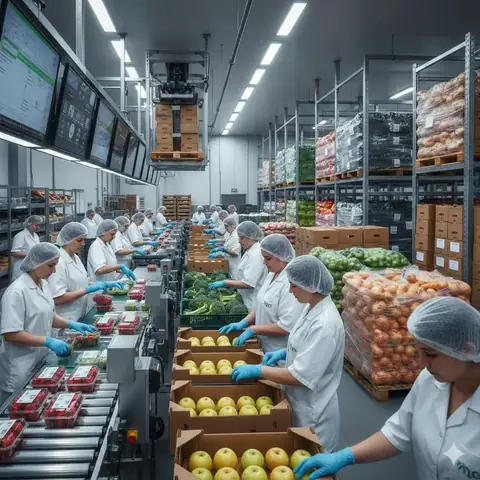 Packhouse operationsFruit and vegetable packing Fruit and vegetable packing explained: sorting, grading, washing and packing potatoes, carrots, onions, sweet potatoes, apples and salads, with traceability.
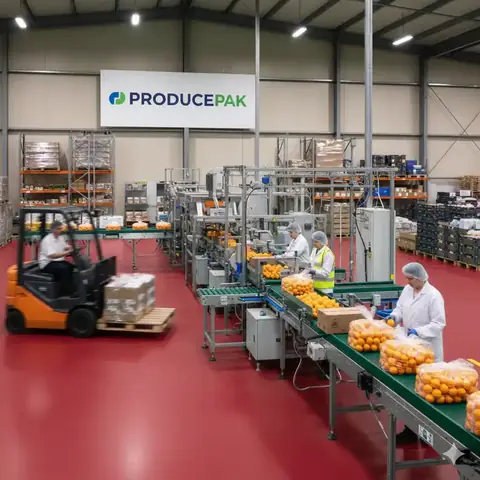 Traceability, QC & complianceFresh produce quality control Fresh produce quality control: consistent inspection templates, photos, alerts, AI-assisted inspection and QC in fruit and vegetable processing and IQF.
 Packhouse operationsHow to reduce postharvest loss Reduce postharvest loss in fresh produce: FIFO rotation, targeted QC on at-risk stock, storage adjustments, accurate picking and fewer customer rejections.
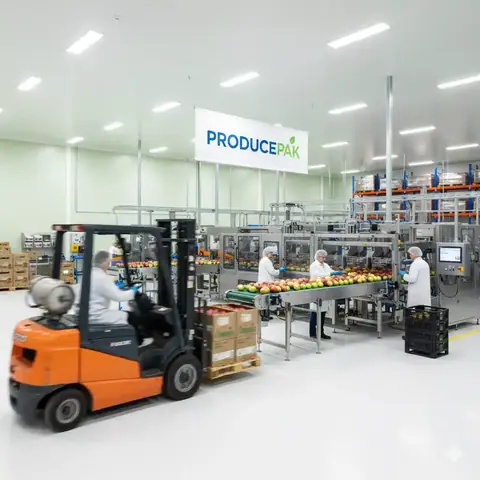 Inventory & warehouseInventory management for fresh produce Fresh produce inventory management: FIFO and expiry alerts, batch/lot tracking, seasonality, dynamic pricing, grader data, stock-takes and forecasting.
See Producepak running on your produce
Watch the short video, then book a live demonstration with a fresh produce consultant.