Potato packing Australia
Potato packing put on overdrive with Farmsoft's Australian Potato Packing app for grower, packer, and wholesaler of Australian potatoes. Easily manage long term potato storage and potato FIFO.
Potato packing Australia Compliance
View Fresh Produce App Specifications and Requirements.
Generally, it is no longer possible to plant a potato crop and aim for a general market. Growers now have to meet tight quality criteria established by a specific end-user or face financial penalties and in the worst cases, crop rejection. As a result, the whole growing program, from variety choice, seed spacing and agronomic management, right through to desiccation and storage, is designed to produce a high yield that fulfills the quality requirements of the marketplace.
Fresh market potatoes
Tuber quality in terms of appearance and cooking quality is of prime importance to the consumer. Much depends upon variety choice, but also the way the potato is grown.
For the fresh market, tubers need to be consistent in shape and size (45 -85 mm), with good skins that are free of any disease or blemish.
Dry matter (DM) content is also important as tubers with a DM above 18-20% are more susceptible to bruising and may disintegrate when boiled during cooking.
Fresh potatoes are increasingly sold in a range of ‘pre-packs’. Lower priced grades are sold loose or in ‘value packs’.
Processing potatoes
Processing potatoes need to be evenly shaped and of a standard size and quality from one end of the tuber to the other.
For French fries and crisps, a high DM content is needed in order to achieve a good fry colour. Standard colour charts are used by processors to achieve consistent fry colour. In the past, contracts have stated that 18% DM is the minimum. However, industry standards now seek potatoes with a 20-25% DM.
Certain types of sugar - particularly reducing sugars - must also be low, otherwise the French fry or crisp will brown on cooking. Contracts usually specify an acceptable range of reducing sugars.
Processors usually apply contract penalties for losses due to blemishes, bruising, pest damage, greening, growth cracks, etc. A standard contract will specify a maximum of 5% out grade potatoes by weight - i.e. 5kg per 100kg.
Starch production
Potatoes are one of the most important sources of starch worldwide. Variety choice is very important and potatoes with greater than 13% starch content are required in countries such as Germany. The higher the starch content, the lower the waste. Potato tubers contain a large range of starch granule sizes (10-100 mm versus 5-40 mm for cereals) as well as having a high phosphate content. The starch quality influences the final paste properties, especially its viscosity.
Seed production
Crop yields and quality depend greatly upon the health status of the seed. In order that growers can be sure of the quality of their seed purchased some countries have seed production controlled by "Seed Classification Schemes".
Potatoes grown for seed should consist of a uniform grade of small, well-formed tubers - usually 30-55mm diameter size range. Where cut seed pieces are used, fungicides should be used to reduce disease risk.
As a result, the whole growing program, from variety choice, seed spacing and agronomic management, right through to desiccation and storage, is designed to produce a high yield that fulfills the quality requirements of the marketplace.
Potato packing Australia Food Safety
Fresh produce quality inspection specifications & requirements.
Background
Food Standards Australia New Zealand (FSANZ) has a collection of analytical data from the 1980s to the present that was used to develop nutrient profiles for potatoes consumed during the 2011-12 National Nutrition and Physical Activity Survey (NNPAS) component of the 2011-13 Australian Health Survey (AHS).
In previous national nutrition surveys surveys, potatoes have been reported as a major contributor to vitamin C intakes. However, recent analytical data commissioned by FSANZ in 2008 indicated that levels of vitamin C in cooked potatoes were actually quite low.
In June 2013, FSANZ undertook a small analytical program to collect nutrient data on a range of raw and boiled, peeled and unpeeled potatoes, to check estimates of the likely vitamin C content of potatoes and to determine how vitamin C levels vary in potatoes as a result of washing and boiling.
Sampling
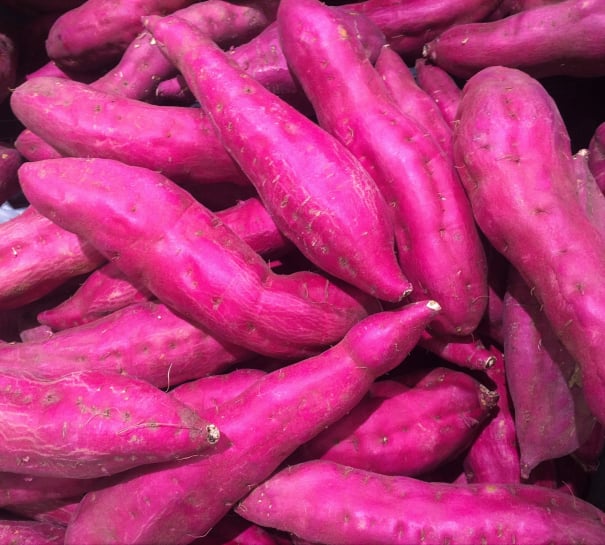
FSANZ selected three types of potatoes for analysis of ascorbic acid (vitamin C): white skinned purchased already washed, white skinned unwashed and pink skinned washed. For each type of potato, twenty potatoes were purchased from a range of outlets including supermarkets and independent grocers. FSANZ purchased the samples in Brisbane on 24 May and in Canberra on 29 May 2013. Potatoes were stored in a cool dark place after purchase.
Preparation and analysis
FSANZ grouped the potatoes into 12 composite samples, with each sample comprising five potatoes purchased from five different locations including two in Brisbane and three in Canberra, as shown in Table 1. FSANZ weighed and photographed the 12 composite samples before sending them to the National Measurement Institute (NMI) where they were received on 5 June 2013.
Table 1: Potato samples selected for analysis
Potato Type
Unpeeled, raw
Peeled, raw
Unpeeled, boiled
Peeled, boiled
Total
The NMI prepared and analysed the samples on 6 June 2013 in accordance with specific instructions set out by FSANZ. These instructions included how the samples should be washed, cut, cooked and weighed.
The NMI conducted the analyses at their Melbourne laboratories using methods of analysis that have been accredited by the National Association of Testing Authorities.
Results
FSANZ considered the results of the analyses conduced on 6 June (Table 2 and Table 3 below) with reference to older analytical values. There were minor differences in the analysed vitamin C values between white skinned, pink skinned, peeled and unpeeled potato samples. An unexpected difference was identified with notably lower vitamin C levels in raw potatoes compared to boiled potatoes. While the results for boiled potatoes were in line with older Australian and overseas data, the result of much lower vitamin C in raw potatoes was not.
After consultation with the analysts, we agreed that the most likely reason for this unexpected result was excessive time taken at the laboratory to prepare the five individual samples that formed one composite sample for analysis. Potatoes contain enzymes that degrade vitamin C and this process accelerates when the potato flesh is exposed to air. Exposure to air is hard to avoid when preparing raw potatoes for analysis, especially given the time it can take to prepare a composite sample. As a result, a substantial amount of vitamin C can be lost from raw potatoes during the procedure. Cooking processes, on the other hand, deactivate the enzymes that degrade vitamin C. If the cooking is started quickly, as soon as a potato has been peeled, the potato flesh gets little exposure to air and destruction of vitamin C by enzymes is minimised.
FSANZ considered that the preliminary results from analyses conducted on 6 June indicated too much time had been taken in the preparatory steps of the analysis of raw potatoes. Therefore, a modified sample preparation procedure was developed by FSANZ and NMI where each sample would be from one potato only, homogenised and then analysed immediately.
Additional samples of the same varieties of potatoes were purchased in Victoria by NMI. The NMI undertook a new analysis of raw potatoes on 25 June using the modified preparation procedure, to minimise degradation of vitamin C in raw potatoes.
The results from the second analysis of raw potatoes were in line with older Australian and overseas data and consistent with the levels of vitamin C found in boiled potatoes.
Potato packing Australia Packaging Standards
Detpak’s journey toward this groundbreaking packaging solution was marked by collaboration with Mitolo Family Farms and Coles, two industry giants equally committed to environmental stewardship. Together, they set out to transform the landscape of fresh produce packaging, aiming to reduce plastic usage and minimize environmental impact.
After three years of rigorous research and development, Detpak successfully launched Australia’s first kerbside recyclable paper bag for fresh potatoes. This innovative solution slashes plastic usage by an impressive 64%, equating to 8.2 tonnes less plastic each year, and maintains product quality, extends shelf life, and offers kerbside recyclability, perfectly aligning with Australian Packaging Covenant Organisation guidelines.
“This achievement resonates far beyond mere recognition; it signifies a shift toward sustainability within the grocery sector, fuelled by consumer demand for sustainable packaging,” the company says. “Detpak takes immense pride in leading this change, pioneering solutions that meet and surpass industry standards.”
Romano Bolzon, Detpak, Group General Manager of Sales, emphasised Detpak’s ongoing commitment to driving sustainable change across the packaging industry, and our dedication to evolving packaging solutions for the environment.
“This award stands as a testament to the dedication and hard work of every member of the Detpak team, as well as our invaluable collaboration with Mitolo Family Farms and Coles. Together, we have proven that sustainable innovation is achievable and essential in shaping a brighter, greener future for generations to come.”