Beef Traceability app:
Beef Traceability app for livestock, harvesting, beef fabrication and packing processes. Full beef quality management solution for wholesale, import/export, manufacturer & packers of beef.
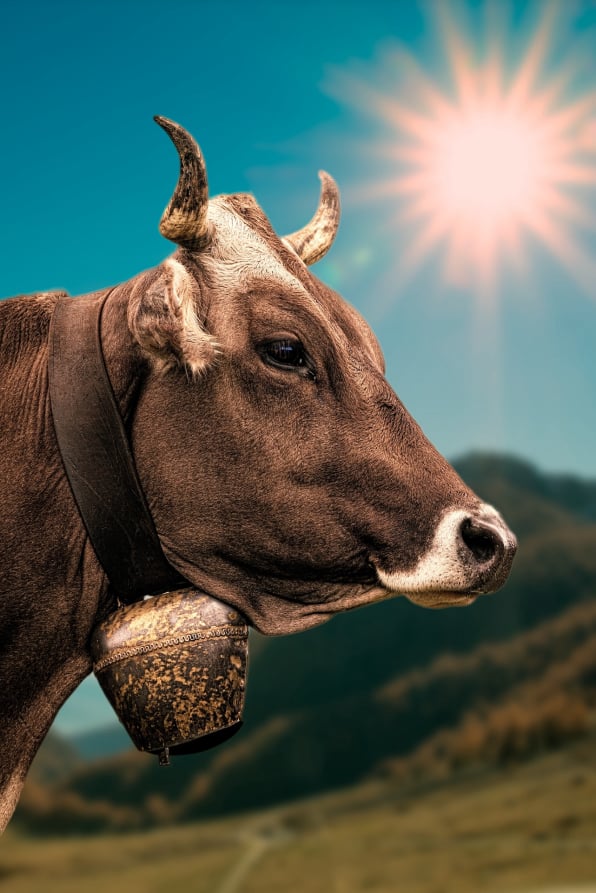
Beef Supplier Traceability & management
what do we mean by traceability?
Traceability in meat production is the ability to trace an individual cut of meat from field to fork. This means that any beef, lamb or animal produce that ends up on your plate, can be tracked all the way back to the farm and animal which it came from. By following traceability processes at each stage of a supply line, it is possible to achieve full meat traceability.
why is traceability important?
At Farmison & Co, we believe that meat traceability is crucial. Here are some of the main reasons why it is important:
Meat traceability ensures that only top quality meat is used in any products.
Meat traceability makes it possible to know whether your meat has come from an ethical farm or not.
Meat traceability helps ensure animal welfare standards are being followed.
Meat traceability makes it possible to check that animals are being farmed sustainably.
Meat traceability protects farmers whilst promoting better farm practices.
Meat traceability gives the consumer confidence.
For us traceability is an important part of our commitment to principles over profit. Tracing our meat is just one of the ways in which we prioritise flavour and British farming above turnover.
farmison & co's commitment to meat traceability
Farmison & Co are proud to be industry leading in meat traceability and food provenance. We work with small, local farms and have close relationships with all of our farmers. This allows us to go above and beyond when it comes to meat traceability. Each pork joint or beef steak that ends up on your plate can be traced back to the free range pig or grass-fed cattle from which it came from, as well as the farmer or producer. This means we can be certain that we are only delivering the highest quality products. Unfortunately, not everyone shares our passion for meat traceability. If you enjoy flavoursome food with true traceability, eat better meat with Farmison.
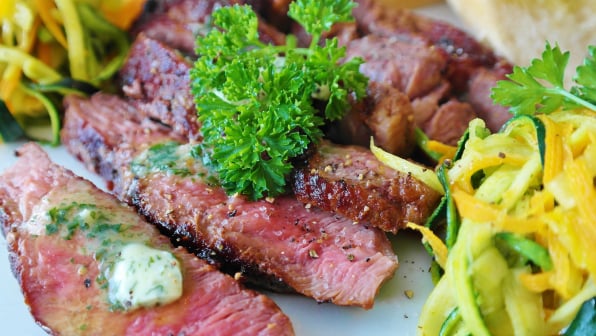
Beef Traceability during production
View App Specifications.
Benchmarking and standards
MLA collaborates with Codex Alimentarius activities, food safety systems and GS1 product identification systems to ensure that the work we do aligns with global directions.
Capacity building
Possible technology solutions
MLA has developed a service provider catalogue for use by industry (see below for access details).
Marker technology
A project has been initiated to pilot country of origin ’marker’ technology. This will scientifically distinguish beef and lamb produced in Australia from meat produced in other countries.
Focusing on trace elements and isotopes, the technology aims to deliver an innate chemical fingerprint. This fingerprint will tie products to their production or manufacturer origin. Not only will this support provenance claims, but it will identify substitution and counterfeit goods.
If the technology is successful the industry will be in a position to audit (test) any products labelled as Australian beef and lamb are true to their claimed country of origin.
Commercial case studies
Three commercially based case study trials are currently running to determine the best way/s to provide customers and consumers with confirmation of the authenticity of product. These trials are up and running with different supply chains into Singapore, Japan, the United Arab Emirates, China and the United States.
The trials will not only test the technology offerings but communicate the key learnings via case studies to help build capability in other supply chains.

Beef Traceability & management
Businesses handling meat must have a traceability system. The exact form of the system varies, depending on the activity of the business, but it will be based on a set of continually updated records, which you can keep either manually or on computer. It may well include other documentation, such as delivery notes or receipts.
This system ensures that beef on sale to customers can be traced back to the animal or group of animals it came from.
Record basic traceability information
The principle of a traceability system is that for each intake of beef or veal into your business, you must make a record that shows:
information about where you got the meat from, including the reference number or code on the label (eg the kill number of an animal at an abattoir or the batch number of a batch of meat supplied by a cutting plant)
information about the meat’s origin and slaughter (part of the compulsory labelling information that goes with the meat throughout the supply chain)
the reference number or code you put on the label, if it’s different to the supplier’s number or code (eg if you combine meat from different sources under the rules for batching)
For animals aged less than 12 months, abattoirs must record (and other businesses may record):
the animal’s date of birth
the animal’s identification number (a unique number eg the ear tag number)
Other information to record
You should record:
the date of arrival of each animal, carcase, part carcase, primal or other cut of meat
the date of departure of the meat (or date placed on the counter)
This will ensure that there is a balance between arrivals and departures.
The other information required for your traceability system will depend on the nature of your business. You could also record some or all of the following:
the supplier
delivery note
kill date and kill number
weight
UK ear tag/cattle passport number or reference code
product (cut)
tray number or colour
for animals under 12 months, date of birth and/or carcase category identification letter (V for animals aged less than 8 months, Z for animals aged from 8 months to less than 12 months)
Other traceability requirements
Your traceability control systems may need to accommodate the requirements of other schemes and standards for which you are enrolled, such as those for:
organic meat
kosher meat
farm assurance schemes
Protected Geographical Indication (PGI) or Protected Designation of Origin (PDO) products

Daily Beef factory hygiene checklist
:::
A Traceability System for Domestic Beef
Following the promulgation of amendments to the Act Governing Food Sanitation on August 8, 2012, the Department of Health set the legal limits for ractopamine residue in imported beef and stipulated that all products on the market that contain beef must clearly be labeled with the place (country) of origin of the beef ingredient.
The COA, to ensure that domestic beef is labeled according to regulations, has actively promoted the traceability system for domestic beef, as part of the “cloud services” of the Executive Yuan. Taking into account that most agricultural operations in Taiwan are small, and the degree of computerization and digitization is relatively low, there have been difficulties in completely bringing all beef producers into the production-and-marketing traceability system required by the “Agricultural Production and Certification Act” and the “Regulations on Traceability Certification.” Therefore we have come up with the “Domestic Beef Traceability Data Network” for use by small operators of beef-cattle farms and slaughterhouses. Through this network businesspeople will be able to investigate and reconstruct the process that a specific beef product has gone through, which will certainly encourage upgrading in the entire industry. Consumers can also use the system to clearly differentiate and select domestic beef. The main elements of the system, as well as its current status, are as follows:
■ All beef cattle raised in domestic operations of 40 head or more must have ear tags attached, and a file created with information on the place of origin of each tagged animal. In September of 2012, the COA completed purchase of the ear tags as well as a schedule for attaching them. By the end of 2012, ear-tagging and creation of place-of-origin files had been completed for 26,000 head (87% of the total, excluding Kinmen County).
■ In early October of 2012, the COA completed construction of the Domestic Beef Traceability Data Network, assisting cattle operations to get place-of-origin data into the cloud services. Using this network, certificates for beef cattle slaughtered at slaughterhouses can be printed with the QR code. Using this QR code, consumers can trace back information, including the date on which the animal was slaughtered, the beef-cattle farm where it came from, and the slaughterhouse.
■ The COA has also formed an expert team to provide product traceability guidance services to beef-cattle farms, slaughterhouses, and butchering operations, in order to create together a data chain for the domestic beef industry that links points of marketing, slaughtering, and raising.
■ The COA promotes the use of place-of-origin labels for domestic beef products in order to achieve market differentiation from imported beef. In 2012 the COA held 21 lectures to explain place-of-origin labeling, working through local governments to illustrate the policy to local beef sellers. Visits were conducted to 272 domestic-beef points of sale throughout Taiwan to distribute domestic-beef labels for the implementation of the use of place-of-origin labels by sellers of domestic beef. The overall goal is to ensure the sustainable development of the domestic beef industry.
■ As part of the COA’s major goal of promoting “local production, local consumption,” in 2012 we provided guidance in establishing seven shops specializing in the retail sale of domestic beef, in an effort to broaden the market for domestic beef. We also expanded guidance to three beef-cattle farms to join a voluntary production-and- marketing traceability system. In 2012 the volume of beef products certified under this system reached about 25 metric tons. In the future, we will expand this production and marketing traceability system into more beef slaughterhouses or butchering operations, with the aim of increasing the volume of beef covered. We will also coordinate marketing activities at demonstration sites for place-of- origin labeling of domestic beef, in order to broaden consumer awareness of high-quality domestic beef.